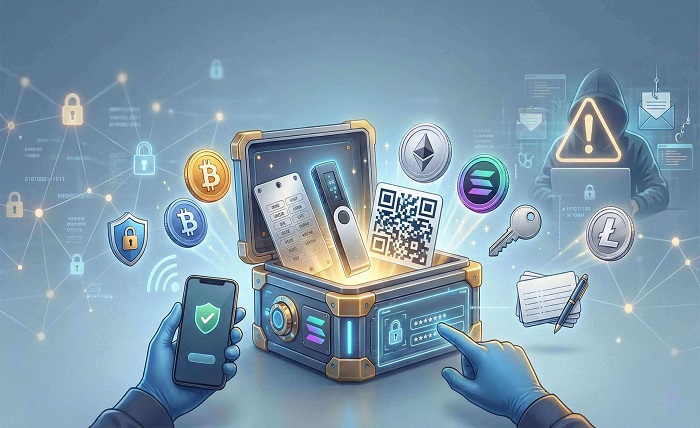
Crypto payments have moved from a niche habit to a practical option across many online services. People now use digital coins for subscriptions, trading platforms, gaming accounts, and international transfers. The attraction is clear: fast movement, wide access, and fewer traditional banking steps. Still, convenience does not remove responsibility. Before using parimatch crypto payment options or any other online crypto payment method, users should verify the wallet address, selected network, transaction limits, and confirmation rules. One careless tap can create a problem that is difficult to fix.
Safer crypto payments do not require advanced technical knowledge. They require patience, accuracy, and a few habits that protect the user before funds leave the wallet. The safest transaction is usually the one checked slowly before it is confirmed quickly.
Why Crypto Payments Need a Different Mindset
The protection layers that are often found in card payments and bank transfers are familiar to most people. This can be contested by a user, or they can wait for a failed transaction to reverse. Crypto payments are different. If there is a mistake in the address sent and the transaction is sent to the wrong address, or a mistake in which network the transaction is sent on, it may be impossible or unlikely to recover.
That difference alters the role of the user. With the use of crypto comes greater accountability and more control. Even though the platform displays the payment instructions, the user must take the time to copy and paste the payment method correctly, choose the right coin, find the appropriate network and provide the correct amount.
Fraud isn’t always the biggest risk. Often, it is speed. A user pops up to a deposit screen, copies a deposit address, confirms the transaction and later realizes that they copied the wrong one. Many of these errors are avoided by a slower process.
Check the Coin, Network, and Wallet Address
One of the most common mistakes with crypto payments is thinking that all networks are the same. They simply are not. For example, there are two versions of USDT USDT on ERC20 and USDT on TRC20 and they are on completely different networks. If you send the money to the wrong one, you can lose it, or if you use a wallet and a platform, the money can be delayed, etc.
A safer payment starts with three checks:
- The coin selected in the wallet must match the coin requested by the platform.
- The network must match exactly.
- The wallet address must be copied and checked before sending.
Address checking should become automatic. A good habit is to compare the first characters and the last characters after copying. If using a QR code, the address still deserves a manual check before confirmation. Clipboard malware and copy errors are rare compared with ordinary user mistakes, but both can happen. A user should never rush because the screen looks familiar.
For larger payments, a small test transaction can reduce risk when the platform allows it and when fees make sense. This adds time, but it can prevent a larger mistake.
Fees, Limits, and Timing Can Change the Experience
Crypto payments are often described as fast, but “fast” does not always mean instant. Transaction speed depends on the network, congestion, confirmations, and platform processing. A transfer can appear completed in one wallet while the receiving platform still shows it as pending.
Fees also deserve attention. Some networks are cheaper than others, but cost should not be the only factor. A cheaper network is useful only when it is supported by the receiving platform. Choosing a lower fee in the wrong context can create a bigger problem than paying slightly more on the correct network.
Users should check
- Minimum and maximum payment limits.
- Required network confirmations.
- Estimated processing time.
- Deposit and withdrawal conditions.
- Whether the amount must match the platform’s instruction exactly.
A pending status does not always mean something is wrong. Sometimes the network simply needs more confirmations. The user should keep the transaction hash, amount, network, date, and time. These details help support teams trace the payment if a delay appears.
Account Security Still Matters With Crypto
An account with a weak level of security can be technically “corrected” but still be unsafe for a crypto payment. It’s important to have strong login practices because payment access and account access frequently go hand in hand. Using a weak password, a compromised email or same login can leave the user at avoidable risk.
If possible, make sure to use two-factor authentication. Apart from that, it is essential to have a secure email account as most of the time, the password reset links and payment notifications end up in it. Do not make any payment on free wi-fi networks, especially if you log into your wallets and account etc.
Red Flags Before Sending Crypto
A payment page should feel clear. If the instructions are confusing, rushed, or inconsistent, the user should pause. Crypto transactions leave less room for improvisation, so unclear information should never be ignored.
Warning signs include vague payment rules, missing network details, pressure to act quickly, promises that sound unrealistic, and support channels that are difficult to find. A platform should make the payment path understandable before the user sends funds.
Users should also be careful with third-party links, unofficial apps, and messages that ask for wallet access. A legitimate payment should never require sharing a seed phrase or private key. Those details give control over the wallet and should stay private at all times. The safest response to uncertainty is delay. A payment can wait until the details are clear.
Better Payments Begin Before the Confirm Button
While crypto payments may be convenient for regular customers, they are there to pay off prudent actions. The procedure should start with verifying the platform, reading the payment guidelines, verifying coin and network, reviewing the address and record-keeping.
No user needs to become a blockchain expert to send funds more safely. Basic habits already reduce most common risks. Check the address. Match the network. Understand the limits. Protect the account. Save the transaction hash.
Digital payments feel smoother when they are controlled. A fast transaction is useful only when it is accurate. The best crypto payment habit is simple: slow down before confirming, then let the technology do what it was designed to do.